
How a Simple Idea Changed Marketing Forever
Do you remember walking into a supermarket and suddenly spotting a Coke bottle with your name on it?
It felt surprisingly personal for a global brand. What seemed like a simple packaging change quickly became one of the most talked-about successful marketing campaigns ever created.
As a team that spends every day helping brands connect with audiences through video and storytelling, we often look back at campaigns like Share a Coke because they demonstrate a simple truth: people engage with what feels personal.
The Challenge Coca-Cola Was Facing
By the early 2010s, Coca-Cola found itself in a position that many well-established brands eventually face. Everyone knew who they were, but familiarity alone wasn’t enough to guarantee attention.
The soft drinks market was becoming increasingly crowded, with consumers presented with more choices than ever before. At the same time, younger audiences were changing the way they interacted with brands. Traditional advertising was no longer having the same impact, and people were becoming more selective about what captured their attention.
For Coca-Cola, the challenge wasn’t simply selling more drinks. It was finding a way to create a genuine connection with a generation that valued personal experiences over broad marketing messages.
As we often see with successful campaigns, the answer wasn’t a bigger budget or a more complicated strategy. It was understanding a simple human truth: people pay attention when something feels relevant to them.
The Surprisingly Simple Idea
The solution Coca-Cola eventually landed on wasn’t a new product, a celebrity endorsement, or a groundbreaking advertising concept.
It was a name.
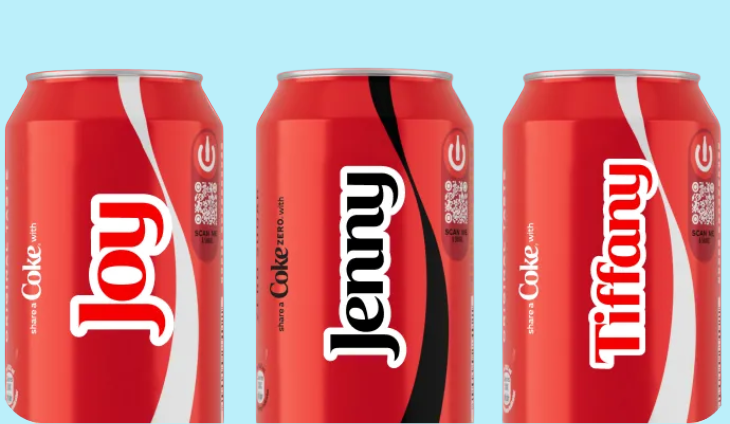
In 2011, Coca-Cola launched a campaign in Australia that replaced its iconic logo on selected bottles and cans with some of the country’s most popular first names. Instead of picking up a Coca-Cola, people were suddenly picking up a Coke that felt like it belonged to them.
At first glance, it sounds almost too simple. After all, changing the packaging of a product isn’t exactly revolutionary. But that’s what made the idea so clever.
Imagine walking into a shop and spotting your own name on a bottle that millions of people buy every day. Suddenly, that product feels different. It catches your attention. You pick it up. You might even take a photo of it or buy one for a friend.
What made the campaign feel so bold at the time was Coca-Cola’s willingness to put people at the centre of the brand. For decades, the famous logo had been the hero of the packaging. Now, customers were sharing that spotlight.
Rather than talking to consumers, Coca-Cola found a way to make consumers part of the story.
And as we’ll see next, that simple shift changed everything.
Why the Campaign Worked So Well
The success of Share a Coke wasn’t really about bottles, packaging, or even soft drinks.
At its core, it was about people.
While many brands focus on getting attention, Coca-Cola focused on creating a personal connection. The campaign tapped into several powerful psychological triggers that influenced how people interacted with the brand, and many of these principles remain just as relevant today.
As a team, we often see the same patterns in successful video campaigns. Whether it’s a global brand or a local business, audiences engage more when they feel recognised, understood, and included in the story.
Personalisation Creates Connection
People naturally pay attention to things that feel relevant to them.
It’s the reason we notice our own name in a crowded room or immediately stop scrolling when something speaks directly to our interests. Psychologists often refer to this as the “self-reference effect”. Information connected to ourselves is more likely to capture our attention and be remembered.
Share a Coke took advantage of this in an incredibly simple way. By putting people’s names on bottles, Coca-Cola transformed a mass-produced product into something that felt personal.
It’s a principle we often think about when creating video content. Audiences don’t connect with generic messages. They connect with stories, experiences, and emotions that feel relevant to their own lives.
People Love Sharing Their Identity
The campaign wasn’t just about finding your own name.
It was also about finding the names of friends, family members, partners, and colleagues. People weren’t simply buying a drink; they were sharing a small part of their identity and relationships.
This taps into another important aspect of human psychology. We enjoy expressing who we are and what matters to us. Social media platforms are built around this behaviour, but Coca-Cola managed to encourage it long before user-generated content became a major marketing strategy.
By turning the product into a personal statement, the campaign gave people something worth sharing.
When we help clients develop video strategies, we often ask a similar question: what would make someone want to share this with another person? The strongest content rarely promotes a product directly. Instead, it creates an emotional response that people want others to experience too.
The Audience Became the Marketing Channel
Perhaps the smartest part of the campaign was that Coca-Cola’s customers ended up doing much of the marketing themselves.
People searched for names, bought bottles as gifts, posted photos online, and encouraged others to join in. Every interaction created another opportunity for the campaign to spread organically.
What started as a packaging change quickly became a conversation.
This is something we believe the most effective marketing achieves. Rather than constantly pushing messages out to an audience, the goal is to create something people genuinely want to engage with and share.
The brands that stand out today aren’t always the ones with the biggest budgets. They’re often the ones that understand how people think, what motivates them, and how to make audiences feel part of the story.
That’s exactly what Coca-Cola achieved with Share a Coke.
How Social Media Supercharged the Campaign
While the personalised bottles captured attention in stores, social media helped the campaign spread far beyond the supermarket shelf. People photographed bottles with their own names on them, searched for friends and family members, and shared their discoveries online. Every post, photo, and tag introduced the campaign to a wider audience without Coca-Cola having to create additional advertising. The idea encouraged people to participate rather than simply consume, turning customers into content creators. As a result, the campaign generated a constant stream of authentic user-generated content, proving that when people feel personally connected to a brand, they’re far more likely to share that experience with others.
What Brands Can Learn from Share a Coke
More than a decade later, Share a Coke is still considered one of the most successful marketing campaigns ever created. Not because it used groundbreaking technology or an enormous budget, but because it understood something simple: people connect with experiences that feel personal.
As a team, we often see the same principle at work across successful campaigns. The brands that stand out aren’t always the loudest. They’re the ones that make people feel seen, involved, and emotionally connected.
Personal Beats Promotional
Consumers are exposed to marketing messages everywhere they look. Most are quickly forgotten.
What made Share a Coke different was its relevance. Rather than talking at people, Coca-Cola invited them into the experience. The campaign felt personal, and that made it memorable.
Simplicity Often Wins
The idea was incredibly simple: put people’s names on bottles.
No complicated messaging. No lengthy explanations. People instantly understood the concept and wanted to engage with it. It’s a reminder that the strongest ideas are often the easiest to understand.
Give People a Reason to Participate
People enjoy being part of a story rather than simply watching one unfold.
By encouraging consumers to find names, share bottles, and connect with friends and family, Coca-Cola transformed a product into an experience. Participation became part of the campaign itself.
Create Content People Want to Share
One of the smartest aspects of Share a Coke was that consumers became the marketers. Every photo, post, and shared bottle helped spread the campaign further.
It’s a lesson that remains relevant today. Whether through video, social media, or brand storytelling, the most effective content gives people a reason to engage and share.
At Impress, this is something we think about in every project we create. Great content isn’t simply seen. It’s remembered, talked about, and passed on. That’s where real marketing impact happens.
Why We Still Talk About Share a Coke Today
More than a decade later, Share a Coke remains a marketing benchmark because it was never really about soft drinks. It was about making people feel recognised. By turning a familiar product into something personal, Coca-Cola created an emotional connection that millions of people wanted to be part of. The campaign is a reminder that successful marketing isn’t always about saying more. It’s about making people feel something. And that’s a lesson that remains just as relevant today.
What the Share a Coke Campaign Teaches Us Today
At Impress Video, we believe the most effective marketing starts with understanding people. Campaigns like Share a Coke remind us that the strongest connections are often built through simple ideas that make audiences feel seen, valued, and involved.
That’s a principle we bring to every project we create. Because when people genuinely connect with a message, they’re far more likely to remember it, engage with it, and share it with others.