
Unlocking the Future of TV Advertisement Trends
TV advertising is evolving rapidly. While traditional viewership is gradually declining, new opportunities are emerging through streaming platforms and connected TV. For brands, this shift is not a limitation – it’s a transformation that opens the door to more targeted, measurable and engaging campaigns.
Today, advertisers are no longer relying solely on traditional broadcast models. The ability to deliver precise, data-driven messaging has led many marketers to increase investment in digital video. At the same time, TV providers are adapting to remain competitive, keeping the efficiency of TV Advertising integrating technologies such as multiscreen strategies and programmatic buying. These developments are reshaping how brands approach media planning and how audiences experience advertising.
Key Trends in TV advertising
TV advertising continues to evolve alongside digital innovation, with several key trends defining how brands reach and engage modern audiences.
One of the most significant shifts is the growth of streaming platforms and connected TV (CTV). These environments allow advertisers to reach viewers beyond traditional broadcast channels, particularly as more audiences move towards on-demand content. This shift is not only changing where ads appear, but also how they are consumed – more intentionally and often across multiple devices.
Another major development is the rise of personalised advertising. Unlike traditional TV campaigns, modern video strategies can now be tailored based on audience behaviour, interests and viewing habits. This level of targeting increases relevance, improves engagement and allows for more accurate performance tracking.
Cross-platform campaigns have also become essential. Rather than treating TV as a standalone channel, brands are integrating campaigns across social media, digital video and streaming platforms. This creates a more consistent brand presence and ensures messaging reaches audiences at multiple touchpoints.
At the same time, the influence of short-form video is reshaping expectations. Audiences are now used to fast-paced, engaging content, which is influencing how TV adverts are structured. Even within longer formats, capturing attention in the first few seconds has become critical.
Why Traditional TV Advertising Is Declining
The television landscape has expanded significantly with the introduction of OTT (over-the-top) and connected TV services. Platforms such as Netflix, Disney+ and Amazon Prime Video have changed how audiences consume content, offering flexibility and control that traditional broadcasting cannot match.
As a result, viewing habits have shifted. Younger audiences, in particular, are moving away from scheduled programming in favour of on-demand content. While traditional TV still holds value – especially for reaching broader or older demographics – it is no longer the dominant channel it once was. However, this does not mean TV advertising is disappearing. Instead, it is evolving into a more integrated and data-driven ecosystem.

The rise of connected TV (CTV) advertising
Connected TV represents one of the most important developments in the future of TV advertising. Unlike traditional broadcast advertising, CTV allows brands to target audiences with far greater precision, creating more efficient commercials. Advertisers are no longer limited to choosing time slots and general demographics. Instead, campaigns can be optimised based on real user data, improving both efficiency and performance.
Programmatic TV advertising plays a key role here, automating the process of buying and placing ads. This reduces manual effort while improving targeting accuracy, allowing brands to reach the right audience at the right moment.
As demand for measurable results continues to grow, CTV is becoming a central part of modern video strategies.

1. TV Advertising Across Multiple Devices
Today’s viewing experience is no longer limited to a single screen. Audiences frequently use multiple devices simultaneously, often engaging with mobile content while watching television, according to this study.
This behavioural shift has important implications for advertisers. A successful TV campaign now needs to consider how content performs across devices, particularly mobile. Rather than treating TV and mobile as separate channels, they should work together as part of a unified strategy.
Multi-device viewing also provides valuable data. By analysing how and when audiences interact with content across platforms, brands can refine their messaging and improve overall campaign performance.

While watching television, 59% of consumers pay special attention to mobile commercials on their phones. Marketers may gain more information about when people watch TV, which network they use, and which mobile channels they use by employing advanced attribution analytics. To fully implement this plan, marketers may need some more attribution information, and this is when Advanced TV comes in.
2. Addressable and Data-Driven TV Advertising
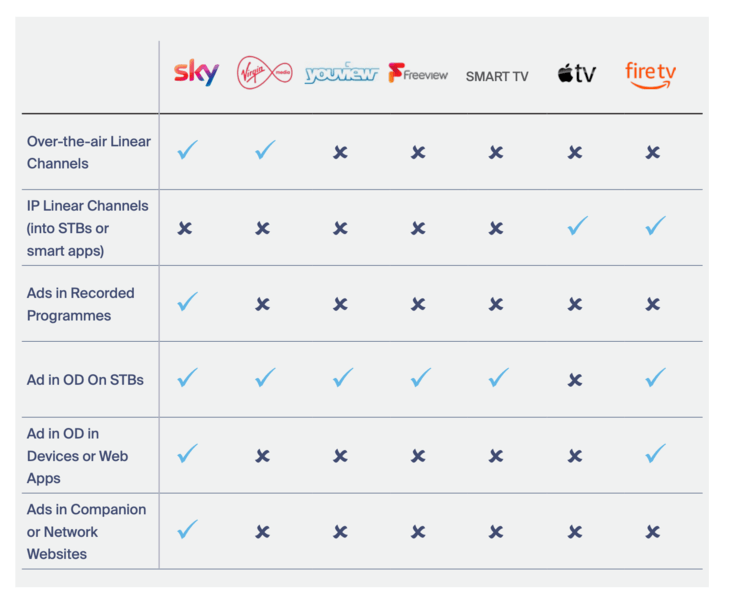
In an industry like television, for TV advertisements to stay afloat, the new strategy that is coming to addressability is being able to tailor the advertisements to an individual’s screen. Addressable TV is transforming how adverts are delivered. Instead of broadcasting the same message to all viewers, brands can now tailor ads to specific households or audience segments.
This level of personalisation requires advanced data systems, but it offers a significant advantage: higher relevance and better engagement. As this technology becomes more widely adopted, it will continue to bridge the gap between traditional TV and digital advertising.
This brings better opportunities for TV commercial production companies to easily target key audiences and still meet the needs of advertisers of having the options of programmatic buying options in the future.
This TV addressable functionality is slowly being implemented across the British television landscape. Below is what is available so far within the television providers in addressable TV advertising.
3. Interactive and Immersive Experiences
TV advertisements are no longer passive interruptions but immersive experiences that engage viewers on multiple levels. With the integration of interactive features, viewers can now participate in ad content, influencing narratives or exploring products in real time.
Augmented reality (AR) and virtual reality (VR) are becoming integral components, allowing consumers to visualize products in their environment before making purchasing decisions.
All in all, boosting brand engagement and fostering deeper connections between consumers and products.
A More Integrated Future for TV Advertising
The future of TV advertising will be shaped by innovation, personalisation and integration across platforms. Rather than replacing traditional TV, new technologies are expanding its capabilities and redefining its role within broader marketing strategies.
Successful campaigns will no longer rely on a single format or channel. Instead, they will combine different approaches – broadcast, streaming, social and mobile – to create a cohesive and effective brand presence.
Understanding these trends is essential for any business looking to remain competitive. As audience behaviour continues to evolve, adapting your video strategy is no longer optional—it’s a necessity.
Contact Impress Video now
At Impress Video, we help brands navigate this changing landscape by producing TV adverts and video campaigns that are designed for modern audiences and multi-platform distribution.
If you’re planning your next campaign and want to make sure your content performs across both traditional and digital environments, we’re here to help.
Let’s create video that not only looks great – but works.