In 2026, Product Video Production is no longer a “nice to have”; it is a core growth lever for marketing leaders and product managers. Whether you are launching a new SaaS platform, introducing a consumer product, or repositioning an established offer, video is often the most persuasive asset in your entire funnel.
From awareness-stage social campaigns to conversion-focused landing pages and sales enablement decks, product videos reduce friction, clarify value, and accelerate decision-making. According to Wyzowl’s annual video marketing research and conversion benchmarks published by HubSpot, video consistently improves engagement, understanding, and purchase intent.
But effectiveness does not happen by accident. It requires strategic planning, audience clarity, strong storytelling, and thoughtful distribution.
This guide will show you exactly how to approach product video production in 2026, from strategy and budgeting to execution, optimisation, and ROI measurement.
What Is Product Video Production?
Product Video Production is the strategic process of planning, scripting, filming, and editing a video designed to demonstrate a specific product clearly and persuasively. Its purpose is to show exactly what the product does, how it works, and why it matters, in the simplest terms possible and within a timeframe appropriate to the audience. Unlike broad brand films, product videos focus directly on functionality, usability, and outcomes. They are built to remove uncertainty by visually guiding the viewer through the product experience, whether that involves unboxing a consumer item, demonstrating physical features, or walking through a SaaS platform interface. At its core, product video production combines storytelling, technical accuracy, and visual clarity to help potential buyers understand both how easy the product is to use and how effectively it delivers on its promise.
Product video vs explainer video: what’s the difference?
The main difference between a product video and an explainer video is that explainer videos focus on a high-level solution for a problem, whereas a product video provides a detailed demonstration of a product’s features and how it fulfils that problem. So, a product video is faster and very much to the point. An explainer video will introduce a high-level problem and really focus on this area, and really talk in-depth about the high-level solution it will provide for that problem.
The difference is strategic:
- Product video: Demonstrates features and functionality in a practical, direct way. It shows how the product solves a specific problem.
- Explainer video: Focuses on the high-level problem and introduces the broader solution concept.
An explainer might describe why workflow inefficiencies cost businesses money. A product demo video shows exactly how your software automates that workflow in 90 seconds.
Table of Contents
- What Is Product Video Production?
- Why Product Videos Are Important in 2026
- Types of Product Videos & Length for Each
- Roles & Responsibilities in Product Video Production
- The Product Video Production Process
- How to Plan a Product Video Campaign
- Scope, Budget & Hidden Costs
- Distribution & Promotion Strategy
- Measuring ROI
- Case Studies (Proof)
- FAQs
- Next Steps
Why Product Videos Are Important in 2026
Product videos are important in 2026 because when a new product enters the market, customers want to see exactly how it works before they decide to buy. It is not enough to describe features in text; buyers expect to see the product demonstrated in real terms. For example, if someone is purchasing a drill, they want to see how easily it comes out of the box, how simple it is to attach the drill bits, and how smoothly it drills into a wall so they can hang a picture. That visual proof of simplicity and effectiveness immediately builds confidence.
The same principle applies across industries. If a customer owns a Hoover and sees a product video from Dyson demonstrating stronger suction, better manoeuvrability, and clearer cleaning results, that demonstration can directly influence their decision to switch brands. In SaaS, a three- to four-minute walkthrough showing exactly how a platform functions and how its features deliver outcomes is far more persuasive than written feature lists. In each case, the goal is the same: to show how easy the product is to use and how effective it is in achieving the desired result. By demonstrating real use cases in realistic environments, product videos reduce hesitation, strengthen trust, and directly influence purchasing decisions.
Types of Product Videos (Use Cases)
There are several strategic formats businesses use in product video production. Below are the most effective types in 2026.
1. Product Demo Videos
A Product Demo Video focuses on showing exactly how a product works in a clear and compelling way. These videos are designed for use on websites, e-commerce stores, SaaS landing pages, or listing platforms where the audience is already interested and looking for clarity. They typically range from around 60 to 180 seconds and concentrate on setup, key features, before/after comparisons, and the quick wins that customers can achieve. Unlike general adverts, product demo videos remove ambiguity by prioritising the features that directly influence purchase decisions, helping viewers understand both functionality and benefit without overwhelming them.
You can see examples of this approach in the product videos featured on Impress Video’s Product Video portfolio, where real products are showcased in use from multiple angles and environments.
BAMBOOI
The Authentic approach. A TV advert video production that introduce their new eco-friendly electric toothbrush to the market.
2. Product Launch / Teaser Videos
Product Launch and Teaser Videos are crafted to generate excitement and awareness ahead of a release. These videos are shorter (usually between 30 and 90 seconds), cinematic in style, and emotionally driven, making them ideal for social campaigns and email blasts. They introduce the core problem the product solves, present a bold value proposition, highlight standout features visually, and end with a memorable call-to-action.
The Product Video page on Impress Video includes examples of high-impact promotional clips designed to capture attention quickly and lift brand engagement across launch campaigns.
OPTI KINETICS
Product launch/teaser video for Opti Kinetics.
3. Feature Highlight Videos
Feature Highlight Videos shine a spotlight on a specific aspect, upgrade, or benefit of a product. These short-form videos, often 15 to 60 seconds long, are optimised for social media and paid ads, each tailored to address one pain point, one feature, and one outcome. Because of their brevity and focus, they are highly scalable and cost-effective, enabling brands to create modular clips from a single production to support multiple campaigns.
Impressions of this format can be found in the concise clips featured in the Our Work: Product Video section, where individual product elements are explained with visual punch.
STEVE BROWN E-COMMERCE
Created high-quality product videos for Steven Brown art to showcase their new range of products through their retail website and social media platforms.
4. Comparison Videos
Comparison Videos position a product directly against its competitors or alternative solutions. These structured videos, usually 60 to 120 seconds, use split-screen or side-by-side breakdowns to compare speed, usability, price-value, and results. In saturated categories like SaaS or tech, comparison videos help buyers see differences clearly and choose with confidence.
CHRISTOPHER WARD - WATCHES
We produced Christopher Ward’s 1st watch concept, setting the tone for numerous watches product videos to follow. This creative product video production makes use of slow motion effects and specially created music for a bespoke feel and tone.
5. Testimonial-Driven Product Showcases
Testimonial-Driven Product Showcases build trust by combining real customer interviews with product footage. These videos typically run 60 to 180 seconds and focus on three things: the customer’s challenge before using the product, why they chose it, and the results they achieved. Authentic stories from real users help new buyers align emotionally with the brand, reducing hesitation and increasing conversions.
Impress Video places client and customer testimonial videos alongside their service portfolio to show how personal validation can elevate a product’s perceived value and credibility.
Sample Video
Sample description
These are just a few of our examples of how product videos are showcased to the intended audience who are looking to purchase that product or upgrade their previous product within that sector. So, for example, if somebody has a Hoover, and they have bought something from the company Hoover, they might watch a TV advert that shows a product video of a Dyson. The Dyson might showcase all its features and how effective it is in cleaning; therefore, that customer will then go out and purchase a Dyson Hoover.
How Long Should a Product Video Be?
With our work here at Impress, we’ve found that the length of a product video really depends on the use case scenario. So, for example, if it’s a simple picture canvas on a wall, that could just be 30 seconds. Whereas if the product is actually a SaaS-based company looking to showcase its latest software, then a three to four-minute demonstration video could be viable and key. Or when buying new technological equipment, whether it’s cameras or laptops or audio equipment, it really does depend on how many features that product has. Somebody who’s going to buy a canvas on a wall is not going to spend the same time reviewing a product video that is five minutes long. So, it really depends who the intended target audience is.
Roles & Responsibilities in Product Video Production
Professional product video production requires coordinated collaboration.
Producer
Oversees budget, timeline, and logistics.
Director
Shapes creative vision and ensures the story aligns with strategy.
Product Manager
Ensures feature accuracy and prioritises key benefits.
Scriptwriter
Transforms technical details into clear, persuasive messaging.
Cinematographer
Captures high-quality visuals, lighting, framing, and camera movement.
Editor
Shapes pacing, clarity, and emotional tone.
Motion Designer
Creates graphics, feature callouts, start/end screens, and branded elements.
Each role contributes to clarity, professionalism, and conversion performance.
The Product Video Production Process
Product video production begins with pre-production, where strategy and structure are defined. At this stage, the objectives of the video are clarified, the target audience is identified, and the core message is shaped. Scriptwriting and storyboarding ensure that every scene has purpose and that the product is demonstrated clearly and logically. Decisions around location, talent, product staging, brand colours, and call-to-actions are made in advance so that the entire team is aligned before filming begins. Strong preparation prevents costly revisions and ensures the final video supports business goals.
The production phase is where the creative vision is executed. This involves filming in a studio or on location, capturing high-quality visuals with professional lighting and well-composed shots, and directing any on-screen talent. Depending on the product, this may include lifestyle demonstrations, close-up feature shots, screen recordings, voice-over sessions, or even drone footage and CGI elements. The focus during production is on presenting the product in its best possible light while maintaining clarity and authenticity.
Post-production brings everything together into a polished, persuasive final asset. Editors refine pacing, structure, and flow, while motion designers add graphics, feature callouts, and branded start and end screens. Colour grading enhances visual consistency, and captions or subtitles improve accessibility and performance across platforms. This stage may also include localisation for different markets and exporting multiple aspect ratios for websites, social media, and paid campaigns. The result is a cohesive product video designed to inform, engage, and convert.
How to Plan a Product Video Campaign (10-Step Framework)
Planning a product video campaign takes on numerous steps and stages. For example:
- Define your objective
- Identify your audience
- Clarify the core message
- Decide on the CTA
- Choose the style and tone
- Set a realistic budget
- Confirm timeline
- Define deliverables (formats, cut-downs)
- Map distribution channels
- Establish success metrics
Research competitors’ product videos. High-ticket brands often invest heavily in research and development; their positioning and structure can provide useful insights.
Key planning questions:
- Where will the product be demonstrated?
- How will it be demonstrated?
- Who will demonstrate it?
- Will your target audience appear in the video? (This is typically a great way of showcasing product videos, especially for TV adverts. But product videos themselves, when people see people like them using the product, they almost instantly have an affiliation with that product.)
- Where will the location be?
- What colours will you use in line with the product’s brand guidelines?
- What runtime fits your audience’s expectations? Having the right length video for the right target audience is very key as well.
Planning prevents expensive revisions later. Preparation through storyboards is essential because the client and your team get to see what happens step-by-step in the product video production. This then lets the wider team, location scouting, prop design, and casting, bring in all the elements of the right people using the products within the right environment. Also, it allows the editing team to see any special effects, start and end screens that will be incorporated, along with call-to-actions.
Download Your 2026 Corporate Video Checklist
A great, personable Corporate Video starts with clear thinking and solid planning. This simple checklist guides you through each key stage, helping you turn your idea into video content that truly works for your business.

Scope, Budget & Hidden Costs
How much does it cost to produce a product video?
The cost of product video production can range anywhere from £500 to £100,000 or more, depending entirely on what is being showcased. A simple video demonstrating a laptop case, focusing on its design and aesthetics, requires a far smaller setup than a high-production car video filmed in a studio, on the road, with drone footage, close-up detail shots, and CGI enhancements. A laptop case can often be presented effectively with controlled lighting and clean feature shots, whereas a car commercial may demand multiple locations, a specialist crew, advanced equipment, and visual effects. The scope of the product naturally determines the scale of the production.
Between these extremes sits a wide range of products, from gym equipment and consumer goods to health and beauty items. Each category brings different production requirements depending on how the product needs to be demonstrated. Some may require lifestyle environments and professional on-screen talent, while others may work best in a studio setting. Budget is strongly influenced by factors such as the number of filming days, the locations involved, the talent featured, and the extent of visual effects or CGI required. The more cinematic and technically ambitious the vision, the higher the overall investment.
Hidden Costs to Consider
Beyond the obvious production expenses, businesses must also consider hidden costs. These can include reshoots if messaging changes, rush editing fees for tight launch deadlines, compliance approvals, music licensing, additional voiceovers for different markets, and the need to export multiple formats for websites, social platforms, and paid advertising. Scaling should also be factored into the original plan. Capturing modular footage during the shoot allows the creation of shorter cut-down versions for social media, paid ads, e-commerce listings, and sales presentations without organising additional filming days. When approached strategically, a single well-planned production can generate a full ecosystem of video assets that maximise return on investment.
What Makes a Good Product Video?
After so many years of experience, we can confirm that a good product video needs to combine strategic clarity with high production quality. It begins with professional camera work, using well-composed, well-lit, and carefully staged shots that reflect the standards audiences are accustomed to seeing in commercial content. Whether filmed in a studio or a realistic home or workplace environment, the setting should represent the most natural use case for the product. Strong visuals are then reinforced with thoughtfully designed feature highlights, motion graphics, and polished start and end screens that align with the brand. When clear messaging is paired with cinematic presentation and purposeful editing, the result is a product video that not only looks premium but also stands confidently alongside other high-quality productions in the market.
Distribution & Promotion Strategy
Product video production does not end at export.
Website & Landing Pages
Embed above the fold to increase dwell time and conversions.
Social Channels
Organic and paid distribution amplify reach.
E-Commerce Platforms
Platforms like Amazon allow sellers to add video to listings, improving time on page and conversion rates.
Email Campaigns
Video thumbnails increase click-through rates.
Sales Enablement
Equip sales teams with product videos inside pitch decks and follow-ups.
Measuring ROI
A key way to measure the success of a product video is, for example, to ask: Was there a call to action at the end of that video? Was there a “buy now” button? Checking the retention rates on a website or a video as to how long a viewer spent watching that video is a key tell-tale sign. Amazon product videos are a fine example of this, where sellers can now add videos to their products. So, here they can measure how long someone has stayed on their page. They can see the photographs they’ve seen, how long they’ve watched the video, and the actions they’ve taken off the back of this. A successful video will always generate leads and sales.
Case Studies
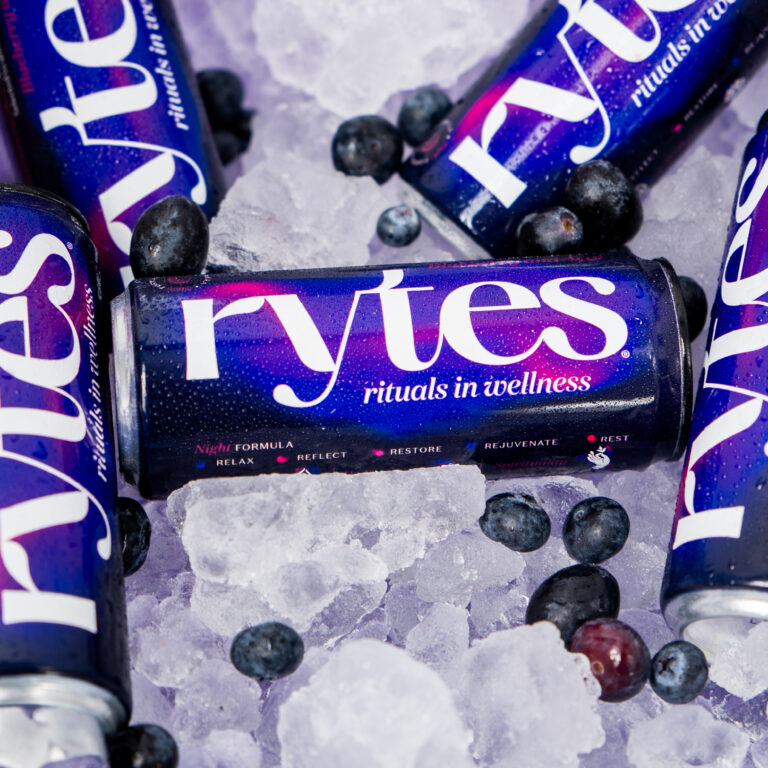
A. Rytes Product Video Case Study: Bringing Wellness to Life
When Rytes approached Impress Video to create a product video for their energy-infused wellness drinks, the goal was clear: capture the brand’s vibrant energy and holistic appeal in a way that matched both the product and the audience’s lifestyle. Rather than simply showing the drinks on a table, the team developed a concept that emphasised natural ingredients, freshness, and a dynamic visual flow that mirrored the product’s identity.
Pre-production involved crafting a mood board that mixed lively colours, fresh fruits, and natural lighting to reflect the brand’s authentic energy. On the day of the shoot, every element, from pouring the beverage over ice to close-ups of the product itself, was planned to reinforce the narrative of vitality and refreshment. After filming, editors focused on colour grading, pacing, and subtle motion graphics to elevate the footage and maintain viewer engagement, resulting in a crisp, under-one-minute video that resonated with Rytes’ target market.
The final product video successfully encapsulated what makes Rytes unique; a balance of energy and sophistication, and delivered a visually compelling message that increased brand affinity and demonstrated how thoughtful video production can strengthen a product’s appeal online.
If you want to learn more about this Case Study, click here!
B. Opti Kinetics Product & Promotional Video Case Study: Raising Visibility and Credibility
For the innovative start-up Opti Kinetics, Impress Video produced both a product video and a companion promotional video to help the business stand out in a crowded market. Start-ups often face tight budgets and tight deadlines, and this project required the team to deliver two high-quality videos that communicated both the product’s features and the company’s mission with clarity and impact.
The collaboration began with in-depth research and discovery to understand Opti Kinetics’ values and audience, followed by detailed scripting and storyboarding to ensure that both the product demo and promotional narrative aligned with the brand’s unique positioning. During production, professional lighting, engaging shots, and smooth transitions were used to highlight useful features and brand personality, while post-production brought it all together with sound design and polished edits.
The result was a pair of videos — one showcasing the product’s capabilities for e-commerce and sales use, and another that told the story of the brand’s mission for broader marketing and awareness campaigns. Together, they helped increase the company’s visibility and credibility, demonstrating how strategic video production can support both product education and brand growth.
If you want to learn more about this Case Study, click here!
FAQs
How long does it typically take to produce a professional product video?
Yes. We always recommend a clear script to shape your story, and we help craft it with you as part of our production planning:
What is the average cost of product video production?
Costs depend on complexity and length, but Impress Video tailors every quote to your needs. Explore real examples and trends on our product video blog.
Do I need a script before starting product video production?
Yes. We always recommend a clear script to shape your story, and we help craft it with you as part of our production planning.
Can you help with product video concepts and storyboarding?
Absolutely. Impress Video guides concept creation and storyboarding from start to finish so your ideas translate flawlessly on screen:
What equipment and techniques are used to make product videos look professional?
We use industry-grade cameras, lighting, and creative filming techniques to ensure every product looks premium. Learn more in our product video insights.
How long should a product video be for maximum engagement?
Length depends on platform and audience. We can tailor formats from short social clips to detailed demos for you.
Can product videos be optimised for social media and e-commerce platforms?
Yes. We optimise every product video for platforms like Instagram, YouTube and Amazon so your content performs where it matters.
Do you provide video editing, voiceovers, and animation as part of the production?
Definitely. Impress Video handles editing, motion graphics and voiceover production as part of the full service:
Next Steps: Launch Your Product Video Campaign
Product video production in 2026 is about more than filming features. It is about strategic clarity, persuasive storytelling, and measurable business outcomes.
If you are preparing for a product launch, improving conversions, or scaling your marketing performance, a professionally executed product video campaign can be transformative.
Book a strategy call with our product video specialists today and start building a product video that drives real results.
Let's discuss your project
Our latest news